


Are Wool Carpets Eco-Friendly? A Sustainability Breakdown
- mkors7960
- Jan 13
- 3 min read
As the issue of sustainability is becoming a top priority in home design we are seeing that in addition to aesthetic value and durability which floors we choose also includes their environmental impact. Wool carpets are put forth as a green option but what is it that truly makes them sustainable? A look at their materials, production processes, performance and what happens at the end of their life reveals the reason why wool carpets are a preferred choice for the sustainable home.
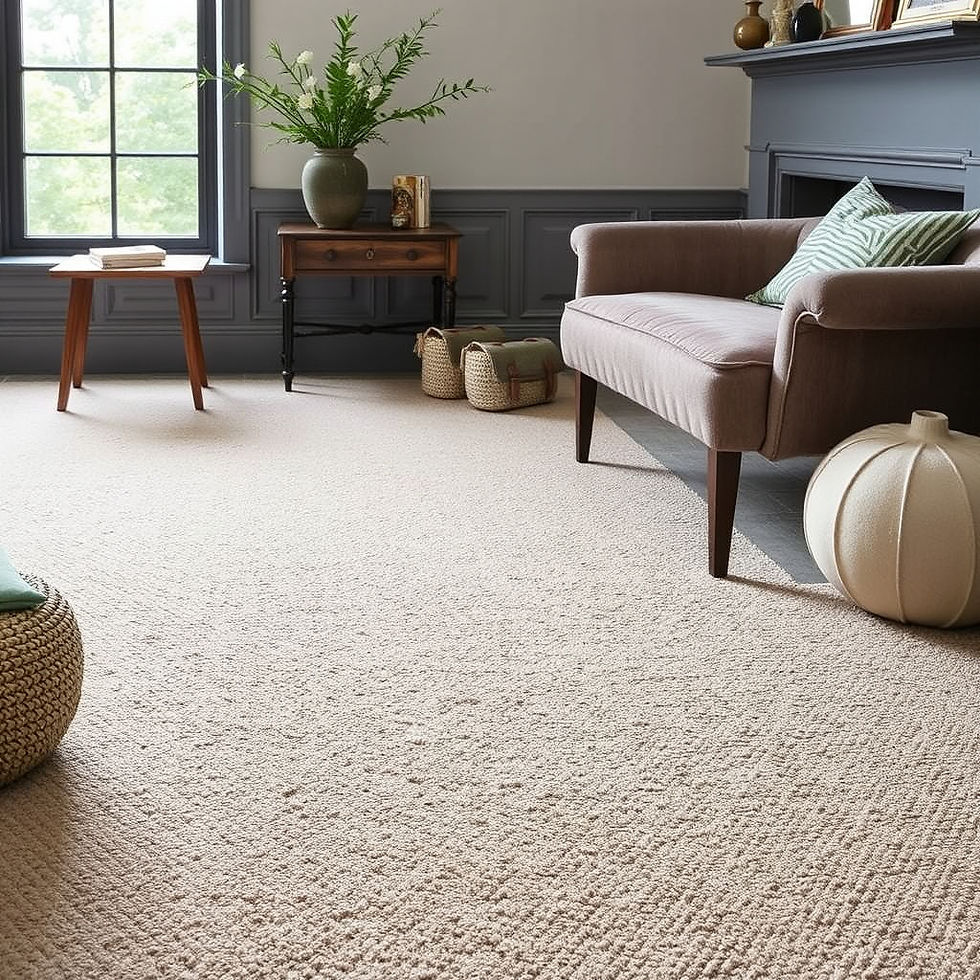
Wool as a Renewable Natural Resource
Why still do we see such popularity in wool carpets in sustainable design. They come from a renewable source which is a great environmental asset. Unlike synthetic carpet fibers derived from petroleum, wool regenerates year after year, making it a sustainable raw material. This renewable cycle answers a common question many environmentally conscious homeowners ask: why wool carpets continue to be favored in sustainable interiors. Their origin from a natural, replenishing source gives them a clear ecological advantage.
Low Environmental Impact in Production
Wool carpet production in general has lower energy use as compared to that of synthetics. We do not see a lot of fossil fuel based material in the former’s base material. Also what is great is that many artisans use industrial equipment very little or not at all, which also means lower in terms of industrial emissions. Many weavers pass down the use of hand tools and low impact processes which in turn preserves energy and culture. Handmade Runner Rugs is a great example of how we can have sustainable products that also are a result of great craft through the use of minimal machines.
Biodegradability and Waste Reduction
Wool carpets’ greatest environmental benefit is that they are biodegradable. At the end of wool fiber’s use they break down in the soil and put out useful nutrients instead of putting out harmful pollutants. This is in sharp contrast to synthetic carpets which add to long term landfill waste and microplastic pollution. Choose wool for a circular, nature friendly product cycle.
Indoor Air Quality and Health Benefits
Wool is also a component in which we see health benefits in indoor environment quality. Wool fibers have a natural ability to absorb air born pollutants and also do a great job at trapping dust which then may be removed through vacuuming. Also of note is that wool does not release volatile organic compounds which in turn makes it a better choice for indoor air quality. Also what we as home owners often pay attention to is how to get rid of carpet beetles but in fact wool is very resilient to these pests’ attacks and with proper care we may look forward to clean living.
Energy Efficiency Through Natural Insulation
Thanks to wool fibers’ crimped structure wool carpets present great natural insulating properties. They trap air in the pile which in turn reduces floor heat loss in cold months and also helps to keep interiors cool in warm weather. This thermal regulation also plays a role in the reduction of use of heating and cooling which in the long term leads to lower energy use and a smaller carbon footprint.
Ethical Sourcing and Longevity
Sustainability is at the core of what we do. Many wool producers practice responsible grazing and animal care which in turn minimizes environmental impact. Also wool carpets are known for their great durability and resilience, they may last for decades with proper care. This long term performance which reduces the need for early replacement of the product thus conservation of resources and minimum waste.
A Balanced Sustainable Flooring Choice
From that which is renewable and biodegradable to better indoor air quality and energy efficiency, wool carpets present a full picture in terms of sustainability. Though no floor covering is totally free from issues, wool carpets do very well in terms of environmental impact, comfort and longevity they are the choice for the eco conscious home.

Comments